The history of perfume begins with fire, not with liquid. For most of the time humans have been making scent, the point was to burn something aromatic and send the smoke upward, because smoke went where people could not. The word itself carries that origin. Per fumum, through smoke.
Everything that followed is a long story of scent moving down from the temple to the body, from the body to the bottle, and from the bottle to whatever is sitting on your shelf right now. It is worth knowing, and not only because it makes good conversation. Almost every argument in fragrance today, natural versus synthetic, reformulation, the price of oud, why one house smells like itself, is a knot that was tied somewhere back along this line. If you have ever wanted the whole arc in one place, this is it. The WhatScent Academy covers the same ground as a course, part five is called The Story of Scent, but this is the version you can read in one sitting.
Key Takeaways
- Perfume began as burnt offering. The earliest use was ritual, not personal, and the technology of smell followed the technology of religion for thousands of years.
- Distillation was the hinge. Refined in the Islamic world, it turned aromatic plants into portable liquid and made everything after it possible.
- 1882 split history in two. The first synthetic material in a commercial perfume gave perfumers notes that do not exist in nature and prices that ordinary people could pay.
- The twentieth century compressed everything. Aldehydes, chypre, the powerhouse eighties, the clean nineties and the gourmand revolution all happened inside eighty years.
- We are living in the niche era. More houses, more materials, more information, and a catalog that finally moves as fast as the launches do.
Table of Contents
- Where perfume actually started
- Egypt, and scent as a state religion
- Greece, Rome and the first perfume industry
- The Islamic Golden Age and the birth of distillation
- Medieval Europe: plague, gloves and Hungary Water
- How Grasse became the capital of perfume
- Eau de Cologne and the birth of fresh
- 1882: the year perfume stopped being agriculture
- The twentieth century in six moves
- Rules, reformulation and the modern bottle
- The niche boom and where we are now
- Frequently Asked Questions
- Conclusion
Discover Your Next Signature Fragrance
Join a community of fragrance lovers. Honest reviews, scent stories and discovery shaped by people with your taste. Get access to the app today.
Live now • Free • Public launch 2026
Where perfume actually started
Perfume started wherever people had fire and something aromatic to put in it, which means it started in a lot of places at once. Resins were the first great perfume materials because they behave well. They keep for years, they travel without spoiling, and they release their smell only when heated, which makes them feel like a substance holding something back.
One of the earliest named perfume makers appears on a cuneiform tablet from Mesopotamia in the second millennium BCE. A woman called Tapputi, described as an overseer of a palace and a maker of scent, working with flowers, oil, calamus and myrrh, filtering and distilling in some early sense of the word. It is a small fragment of text and there is a limit to how much weight it can carry, but it tells you two things worth keeping. Perfume making was already a specialist job. And it was already worth writing down.
The materials of that first era are still on your shelf. Frankincense and myrrh are not historical curiosities. They are working notes in modern perfumery, and they smell now roughly as they smelled then, which is a stranger form of time travel than most people notice.
Egypt, and scent as a state religion
Ancient Egypt is where perfume becomes an industry with a supply chain. Scent was burned in temples, rubbed into skin, packed into tombs, and used in preparing the dead. It was not decoration. It was infrastructure for the relationship between people and gods.
The famous Egyptian compound is kyphi, a burned mixture whose recipes survive in several versions and typically involve resins, honey, wine and aromatic roots. It was a night incense, complex and slow, and ancient writers treated it as something between medicine and ritual.
What matters as much as the recipe is the trade. Egypt did not grow its own frankincense. It came from the south, from the land Egyptian texts call Punt, and one of the best documented expeditions in the ancient world was mounted to fetch aromatic trees and resins back home. Reliefs at the temple at Deir el-Bahari record it in detail, complete with trees carried in baskets. Think about what that means. A state organised a maritime expedition, at real cost and real risk, for smell.
That is the pattern for the next three thousand years. Aromatic materials are worth moving a very long way, and the routes they move along become some of the most important trade roads on earth. If you want the deep version of that story, perfume in ancient Egypt and the incense routes each take one thread and follow it.
Greece, Rome and the first perfume industry
The Greeks took scent off the altar and put it on the body. Scented oils were part of athletics, bathing and medicine, sold in small painted vessels made for exactly that purpose. Different oils for different parts of the body was a real convention, not a modern invention, and the idea of a scent wardrobe is older than almost everyone thinks.
Rome scaled it up and then, in typical Roman fashion, worried about it. Perfumed oils were used with enormous enthusiasm, on skin, on clothes, on animals, in fountains at banquets, and moralists complained about the expense in terms that would be entirely at home in a comment section today. Pliny the Elder wrote about perfume materials and methods in his encyclopedia, including a distinctly grumpy note about how quickly it all evaporates and how much it costs while doing so.
The Roman era also gives us the first widespread commercial infrastructure for scent. Shops, professional perfumers, imported materials arriving through established routes, recognisable brands of a kind. What it did not have was alcohol as a solvent, so everything was oil and fat based, which changes the whole character of the result. Roman perfume sat on the skin. It did not lift off it.
The Islamic Golden Age and the birth of distillation
Here is the hinge of the entire story.
Distillation as a practice existed in some form well before this period, but the refinement that mattered happened in the Islamic world between roughly the eighth and eleventh centuries. Al-Kindi, working in Baghdad in the ninth century, wrote a book of perfume and distillation recipes that reads like a working manual, with substitutions, methods and formulas. Ibn Sina, known in Europe as Avicenna, is closely associated with the improvement of steam distillation, particularly for rose.
Why does it matter so much? Because before efficient distillation, a fragrant plant was mostly stuck in the plant. You could infuse it into fat, you could burn it, you could soak it in oil. After distillation, you could hold the smell of ten thousand roses in a small vessel, ship it across a continent, and blend it with something from three countries away.
Rose water became a commodity of serious economic weight. The attar tradition, concentrated oil-based perfume worn on the skin rather than sprayed, comes out of this world and never left it. It is still how a great deal of the world wears fragrance, and the attar layering traditions of the Gulf are a living continuation of a technique that is more than a thousand years old, not a trend. The broader story of how those materials came back into the global mainstream sits in Middle Eastern perfumes and their global rise.
Medieval Europe: plague, gloves and Hungary Water
Europe got its aromatics back mainly through contact with the Islamic world, and then spent several centuries using them for a mixture of vanity and terror.
The terror part is the theory of miasma, the belief that disease travelled through bad air. If foul smells carried sickness, then sweet smells might hold it off. That logic produced pomanders, scented gloves, herb-stuffed masks and a general conviction that a strong personal cloud of aromatics was a health measure. The medicine was wrong. The habit stuck.
The vanity part produced the first alcohol-based perfumes in Europe. Hungary Water, a rosemary-led spirit-based scent traditionally linked to the Hungarian court in the fourteenth century, is the usual marker. The legend attached to it is almost certainly embroidered. The technical point is not. Once you dissolve aromatics in alcohol rather than fat, the whole behaviour changes. It lifts. It projects. It evaporates in stages, top to base, which is the entire structure of the modern fragrance pyramid.
Renaissance Italy, especially Venice and Florence, turned that into craft and commerce, and when Catherine de' Medici moved to France she took a perfumer with her. That is the tradition, at least, and like a lot of perfume history it has been polished by retelling. What is not in doubt is that Italy and France became the two poles of European perfumery, and that France eventually won.
How Grasse became the capital of perfume
Grasse did not set out to make perfume. Grasse made leather.
Tanning is a repulsive process and medieval tanned leather smelled like it. When scented gloves became fashionable among the European nobility, the tanners of Grasse, sitting in a mild corner of Provence where jasmine, rose, tuberose and orange blossom all grow beautifully, began perfuming their product. The flowers were local. The skill accumulated. When the fashion for scented gloves eventually collapsed under taxation and changing taste, the town had accidentally built an entire flower economy and simply dropped the leather.
For a couple of centuries after that, Grasse was the physical centre of the raw material world. Fields of May rose and jasmine, extraction workshops, and the slow labour-intensive techniques that came before modern solvents, including enfleurage, the method of catching flower scent in cold fat.
Grasse still matters, and some houses still buy their rose and jasmine there, but its role changed permanently once perfume stopped depending on what could be grown. Which brings us to the most important date in the whole timeline.
Eau de Cologne and the birth of fresh
In 1709, an Italian-born perfumer named Johann Maria Farina, working in Cologne, created a light citrus and herb composition in an alcohol base and named it after his adopted city. He described it in a letter to his brother in terms of a spring morning after rain, mountain flowers and orange, which is still, three hundred years later, an unusually good description of what it smells like.
Eau de Cologne matters for three reasons.
It invented fresh. Before it, European perfume ran heavy, resinous and animalic. This was clean, bright and short-lived, and it created an entire register of scent that had not existed as a category.
It became a format. The word cologne now means at least three different things depending on who is speaking, a concentration level, a masculine fragrance in American usage, and this specific classical style. The confusion is genuinely two hundred years in the making. The full untangling sits in the guide to EDT, EDP, parfum, extrait and cologne.
It was a hit for centuries. Very little in perfume stays in continuous production for three hundred years. This did, and the classical citrus cologne remains a working template that houses return to whenever the market gets tired of heaviness. The whole citrus family still leans on the shape he found.
1882: the year perfume stopped being agriculture
Until the late nineteenth century, a perfumer could only use what could be grown, farmed, mined or taken from an animal. The palette was the natural world, and the natural world is expensive, seasonal, inconsistent and finite.
Then chemistry arrived. Coumarin, the sweet hay and almond smell of tonka bean, was synthesised in the middle of the century. In 1882 the house of Houbigant released Fougère Royale, built around it, and the modern era began. There is no fougère plant. The name means fern, and ferns smell of almost nothing. It is an invented smell, a fantasy accord of lavender, coumarin and mossy depth, and it became one of the two or three most important structures in all of perfumery. Every barbershop scent, every classic masculine, every clean aromatic you have ever smelled descends from it. The fougère accord is that idea, still running.
Guerlain followed in 1889 with Jicky, using vanillin and coumarin in a composition that was not trying to imitate any single flower. Vanillin, incidentally, was synthesised decades before there was any question of it being cheaper than vanilla. It was simply available, and it did something no natural extract could do at that dose.
This is the moment worth arguing about, because the argument has never stopped. Synthetics did not make perfume worse. They made it possible. They gave perfumers materials with no natural equivalent, stability that naturals do not have, and prices that put fragrance within reach of people who were not aristocrats. They also made it possible to imitate cheaply, to standardise, and to remove the human hand. Both things are true at once, and the honest version of naturals versus synthetics is worth reading before taking a side.
The twentieth century in six moves
The twentieth century is where perfume becomes recognisable as the thing you buy. Six moves cover most of it.
Chypre, 1917. François Coty released a composition of bergamot, labdanum, oakmoss and patchouli and named it after Cyprus. It was so structurally influential that the entire family took the name of that one bottle. Bright top, mossy earthy base, tension between the two. The chypre accord and the wider chypre family both trace back to it.
Aldehydes, 1921. Chanel No 5, composed by Ernest Beaux, used aldehydes at a dose nobody had used before. The effect is that strange soapy, waxy, sparkling lift over the florals, a smell that is unmistakably not a flower. It made abstraction fashionable. A perfume no longer had to smell like a thing. The aldehyde note explains what they actually are, and the most iconic Chanel scents covers where the house went next.
The amber tradition, from 1925. Shalimar and the generation around it built the warm, vanillic, resinous style that used to be called oriental and is now more accurately called amber. It is the single most durable style in perfumery. Everything gourmand and everything cosy owes it something.
Freshness reinvented, 1966. Eau Sauvage, composed by Edmond Roudnitska, used hedione, a material with a radiant, transparent jasmine quality that makes everything around it seem to glow. It is nearly odourless on its own at low dose and it changed what clean could mean. Modern freshness, the kind that feels airy rather than sharp, starts here.
The powerhouse eighties. Big, loud, confident and enormously fun. Sillage was the point. This was the era when perfume was worn to be noticed at a distance, and the ones that survive from it still perform like nothing made since. The winter beast mode shelf is where that tradition lives on.
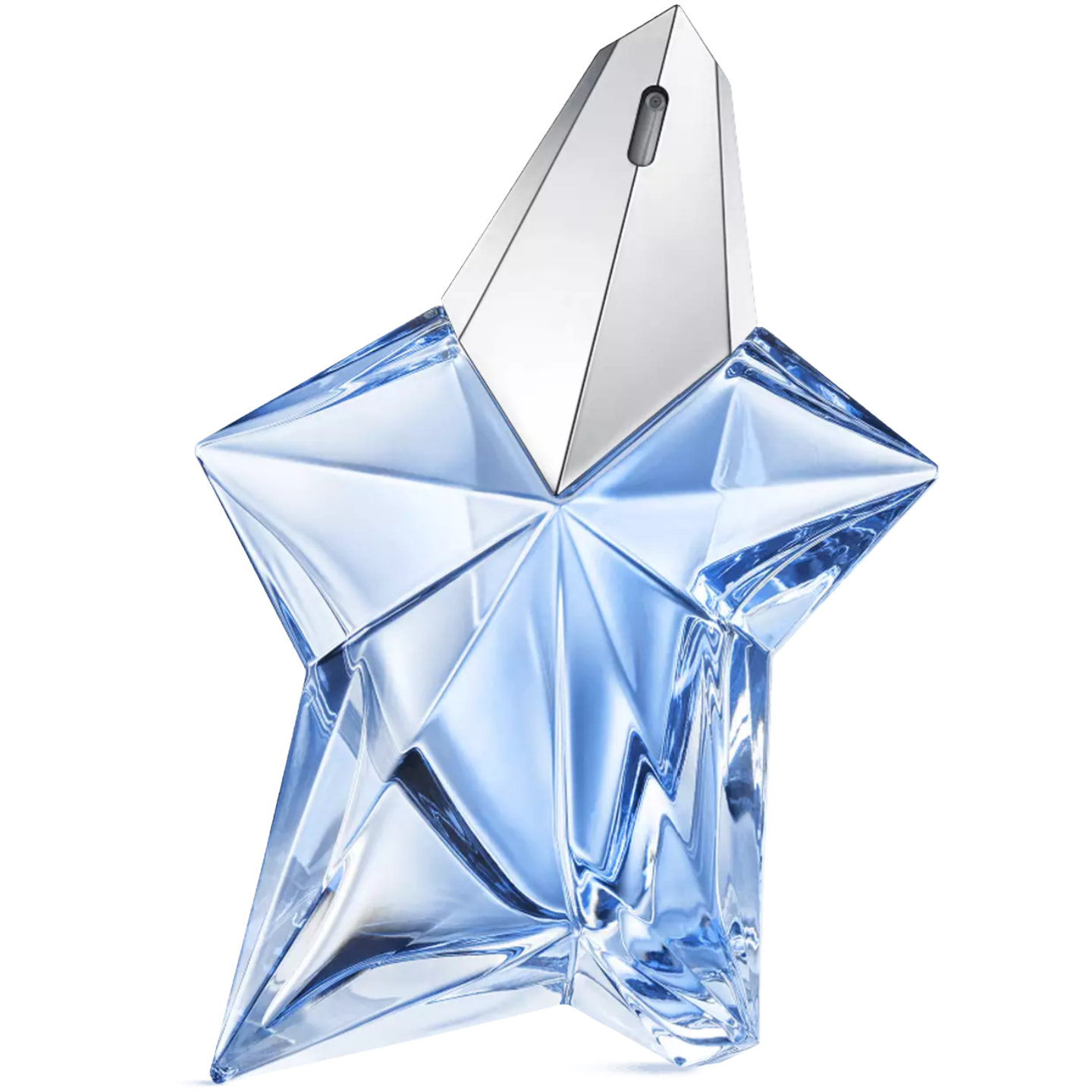
Gourmand, 1992. Angel by Mugler, composed by Olivier Cresp, put patchouli against caramel, chocolate and praline and created a family that did not exist. Perfume could now smell like dessert without being a joke. Thirty years later gourmand is arguably the dominant commercial style on earth, and the gourmand accord is where the whole gourmand family starts.
The nineties are worth one extra sentence because they were a genuine reaction. After a decade of enormous scents came aquatics, clean musks and unisex minimalism, and the market went with them completely. Fragrance history is a pendulum. It always has been.
Rules, reformulation and the modern bottle
If you have ever smelled an old bottle next to a new one and felt sure something was missing, you were probably right, and the reason is regulatory rather than sinister.
The International Fragrance Association was founded in 1973 and issues standards on how materials can be used, based on safety assessments. Over the decades those standards have restricted or capped a long list of materials, including oakmoss, certain nitro musks and various citrus components with phototoxic potential. Houses reformulate to comply. They also reformulate because a supply dries up, because a natural gets too expensive, or because a molecule gets better.
The result is that a perfume is not a fixed object. It is a recipe that gets edited. That is unsettling if you love a specific bottle and useful if you understand it, because it explains vintage hunting, batch codes and half the arguments online. How reformulations actually work, IFRA standards in plain language and how to hunt vintage sensibly each take that further.
There is a quiet consequence for anyone who cares about accuracy. A fragrance entry written once and never revisited slowly stops describing the bottle you can actually buy. This is why WhatScent keeps note and accord information as something the community keeps voting on rather than a fixed list written at launch, and why factual details on an entry have to trace back to the house's own material, with the source kept against the entry so it can be checked again later.
The niche boom and where we are now
The last twenty years did two things at once.
Independent and niche houses multiplied, and distribution stopped being a wall. A small house can now reach the whole world without a department store deciding to stock it, which means more strange and specific perfumes exist than at any point in history. The niche revival and how to get into niche fragrance both cover what that looks like from the buying side.
At the same time, the conversation moved online and then onto video. Taste now forms in public and travels fast. A perfume can go from unknown to sold out in a fortnight because of a clip, which is a genuinely new thing in a five thousand year story. Why perfumes go viral takes that apart.
The awkward consequence is that catalogs struggle to keep up. A house releases something in a single market, a creator posts it, and thousands of people go looking for information that does not exist anywhere yet. That gap between a perfume existing in the world and existing in a catalog is exactly what a community solves better than an editorial team, because someone somewhere already has the bottle in their hand. On WhatScent, new perfumes, including very niche ones, are proposed, reviewed and approved remarkably fast, which is less about size than about how many people are contributing right now.
Where does it go next? Biotechnology is producing materials that were previously either unaffordable or ecologically indefensible. Regulation keeps tightening. And the most interesting shift may be that people are learning the vocabulary rather than just buying the bottle, which is the whole point of the Academy inside the app.
Five thousand years, and the most modern thing happening in perfume right now is that ordinary people are becoming genuinely knowledgeable about it.
Frequently Asked Questions
Q1: Who invented perfume?
A: No single person invented perfume. The earliest named perfume maker recorded in writing is Tapputi, described on a Mesopotamian cuneiform tablet from the second millennium BCE as a palace overseer who worked with flowers, oils and resins. Aromatic burning and scented oils appear independently across many ancient cultures.
Q2: What is the oldest perfume still made today?
A: Eau de Cologne, created by Johann Maria Farina in 1709, is the classical scent with the longest continuous production history. Several nineteenth century compositions, including Guerlain's Jicky from 1889, are also still sold, though every long-lived perfume has been reformulated over time.
Q3: When did perfume start using synthetics?
A: Commercially, 1882. Houbigant's Fougère Royale was built around synthesised coumarin, and Guerlain's Jicky followed in 1889 using vanillin and coumarin. Synthetics gave perfumers materials with no natural equivalent and made fragrance affordable outside the wealthy classes.
Q4: Why did old perfumes smell stronger?
A: Two reasons. Materials that are now restricted or capped for safety, such as oakmoss and certain musks, were used freely in older formulas. And the fashion of the era, especially in the 1980s, genuinely favoured enormous projection. Some of the difference is regulation and some of it is taste.
Q5: Where did the word perfume come from?
A: From the Latin per fumum, meaning through smoke, which describes the oldest form of the practice. Aromatic resins and woods were burned as offerings long before scent was worn on the body, and the name never caught up with the technology.
Conclusion
The through line of five thousand years of perfume is not glamour. It is access. Scent moved from gods to kings, from kings to the wealthy, from the wealthy to anyone with a department store nearby, and now to anyone with a phone. Every step made it cheaper, more varied, and a little less mysterious, and none of that made it less good.
The one thing still unevenly distributed is knowledge. Get free early access to WhatScent on iPhone or Android, open part five of the Academy, and pick up the story where this article leaves off.