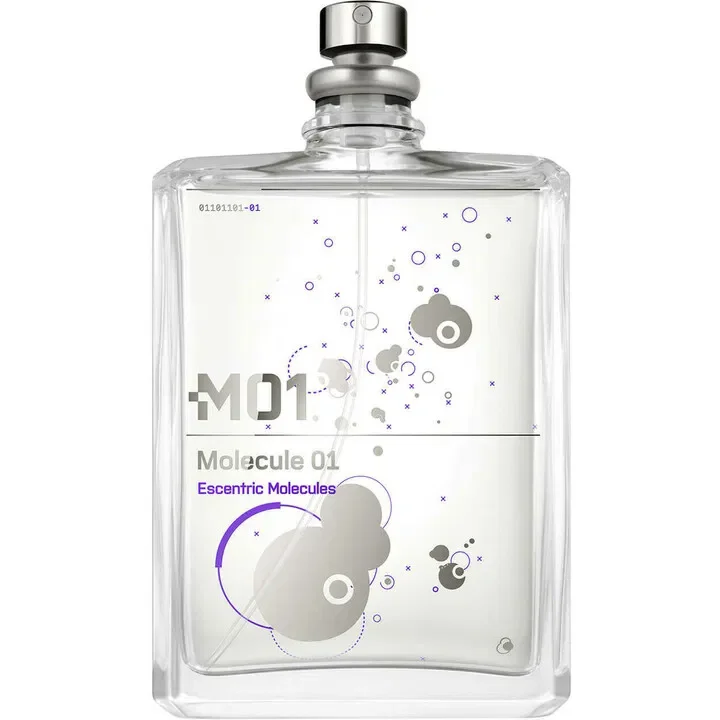
Perfume can make you more attractive, but not the way pheromone perfumes promise. No human sex pheromone has been identified, and a double-blind 2017 study found that the two compounds most often sold as human pheromones had no effect on how attractive people found faces. What research does support is quieter and more useful: a scent you like changes how you carry yourself, a perfume chosen for your own skin smells better on you than one assigned at random, and a scent worn consistently becomes part of how someone remembers you.
This guide separates the marketing from the evidence, explains the three effects that are real, and turns them into practical rules for choosing and wearing perfume on a date or anywhere else.
Key Takeaways
- Skip pheromone perfumes. The compounds they rely on have not held up in controlled studies.
- Wear what makes you feel good. The best-supported effect runs through your confidence and behaviour.
- Choose on your own skin. People pick perfumes that blend well with their natural odour, and others notice the difference.
- Be consistent with one person. A familiar scent builds association; constant novelty does not.
- Wear less than you think. Overapplication is the most common way perfume works against you.
Table of Contents
- Do pheromone perfumes work?
- Three ways perfume really does affect attraction
- The confidence effect
- Your skin and your perfume
- Familiarity, memory and association
- Is there an attractive note?
- How to wear perfume so it helps
- Why compliments are a poor measure
- Frequently Asked Questions
- What to do next
Discover Your Next Signature Fragrance
Join a community of fragrance lovers. Honest reviews, scent stories and discovery shaped by people with your taste. Get access to the app today.
Live now • Free • Public launch 2026
Do pheromone perfumes work?
There is no good evidence that pheromone perfumes work. A pheromone is a chemical released by one member of a species that triggers a specific, reliable response in another. Pheromones are well documented in insects and many mammals, but in humans none has been identified to that standard.
Three points explain why the claim on the bottle runs ahead of the science.
The candidate compounds failed controlled tests. Androstadienone (from male sweat) and estratetraenol (from female urine) are the two most studied "human pheromones". In a double-blind study published in Royal Society Open Science in 2017, researchers at the University of Western Australia found that exposure to either compound had no effect on gender perception, attractiveness ratings or judgements of unfaithfulness of opposite-sex faces.
The organ often cited is not working in adults. The vomeronasal organ, which detects pheromones in many mammals, appears in human embryos but is generally considered vestigial in adults, without a functioning nerve connection to the brain.
Early findings replicated poorly. Attention-grabbing results from the 1990s and 2000s have not reproduced consistently, and several reviews have criticised the field for testing compounds that were never shown to be pheromones in the first place.
Most pheromone perfumes contain one or more synthetic steroid compounds plus an ordinary fragrance. If they do anything for you, it is almost certainly the fragrance and the confidence of wearing it. Spotting marketing versus reality in fragrance copy covers how to read claims like these.
The pheromone perfume promises to change how other people react to you. The research says perfume changes how you act, and people react to that.
Three ways perfume really does affect attraction
Perfume affects attraction through behaviour, skin and memory, all of which are documented and none of which requires a pheromone.
| Effect | What happens | What it means for you |
|---|---|---|
| Confidence | Wearing a scent you like changes how you carry yourself, and others see it | Wear what you love, not what is marketed as seductive |
| Skin blend | Your own perfume mixes with your body odour better than a random one | Test on your skin, not on paper or a friend |
| Association | A scent worn around someone becomes linked to you in their memory | Consistency beats rotation with one person |
Pleasant scents also lift self-reported mood, and a person in a good mood is easier company. Functional fragrance explained covers the mood research and where the claims stop.
The confidence effect
The best-supported finding is that perfume changes the wearer, and observers respond to the change even when they cannot smell anything.
In a 2009 study led by Craig Roberts and published in the International Journal of Cosmetic Science, men were given either a scented or an unscented deodorant to use for several days without knowing which. Women then rated short silent video clips of the men. The men using the scented product were rated as more attractive on video, although the raters had no access to their scent, and the men themselves reported feeling more confident. Still photographs showed no such difference, which points to behaviour rather than looks.
This flips the usual advice:
- Wear what makes you feel good, not what is supposed to be attractive. The effect runs through you.
- A perfume you feel self-conscious in works against you, however many lists call it a crowd-pleaser.
- The best date perfume is often one you already love. Familiar comfort shows in how you talk and move.
Your skin and your perfume
People are good at choosing perfumes that suit their own body odour, and the result smells better to others. In a 2012 study in PLoS ONE, Pavlína Lenochová and colleagues found that a person's body odour blended with their own chosen perfume was rated more pleasant and attractive than the same body odour blended with a randomly assigned perfume, even when the two perfumes were rated as equally pleasant on their own.
That is a strong argument for three habits:
- Test on your skin, never only on paper. A blotter shows the perfume; your wrist shows the blend people will actually smell.
- Wear a sample for a full day before buying. The blend changes as the perfume dries down over hours.
- Do not buy a perfume because it smells good on someone else. Their skin is doing part of the work.
Skin chemistry also explains why the same perfume can smell different on two people. Why people smell things differently covers the biology, including why some people barely perceive certain musks.
Familiarity, memory and association
Smell attaches to people more strongly than almost any other sense, so a scent worn consistently around someone becomes part of how they experience you. Years later, meeting that perfume elsewhere can bring you back to mind in an instant. The science behind scent memory explains why smell is wired so directly to emotional memory.
Three practical consequences follow.
Consistency beats variety with one person. A rotation of twelve perfumes never becomes "yours" to anybody. How to choose a signature scent makes the case for having one.
Novelty gets noticed; familiarity gets remembered. A striking new perfume may earn a comment tonight, while a familiar one builds an association that lasts.
It works in both directions. A perfume worn during a relationship that ended can become hard to wear afterwards. How to retire a fragrance covers what to do with it.
Is there an attractive note?
No note has a demonstrated aphrodisiac effect on humans. Vanilla, musk, amber, oud and rose dominate "sexy perfume" lists because they are warm, soft and sit close to the skin, which reads as inviting, not because they act on anyone chemically.
Musk is the most misunderstood case. Natural musk came from the musk deer, and modern perfumes use synthetic musks that smell clean or skin-like. Is musk still from animals? explains the switch, and what animalic notes are explains why skin-like warmth does so much work in close-wearing perfumes.
The woody-amber molecule Iso E Super attracts similar myths. Molecule 01 by Escentric Molecules (Eau de Toilette, 2006, Geza Schoen) contains only Iso E Super and is often described online as working "like a pheromone". The real reason it gets noticed is simpler: many wearers smell it weakly on themselves while people close by smell it clearly, so it seems to appear only when someone leans in. Iso E Super as a perfume note explains the molecule.
How to wear perfume so it helps
Wear a perfume you love, in a modest dose, where closeness happens. These rules follow directly from the research above.
- Use fewer sprays than usual. One or two on the neck or chest is plenty for a dinner or a date. Someone should discover your scent when they are close to you, not before you arrive. Sillage etiquette covers the social side, and what to do if you sprayed too much covers emergencies.
- Apply where closeness happens. Neck, collarbone and chest are smelled at hugging distance. How to apply perfume properly covers placement in detail.
- Prefer warm and skin-adjacent over loud. Soft musks, amber, warm woods and light gourmands suit close settings, which is why skin scents work so well here.
- Match the setting. A dense evening perfume in a small, warm restaurant reads very differently from the same perfume outdoors. Best first date perfumes and best date night perfumes cover concrete picks for each situation.
- Test before the night, not on it. Wear a new perfume for a full ordinary day first, so you know how it develops on your skin and that you feel like yourself in it.
If you are undecided, the Fragrance Finder in WhatScent matches you to perfumes built like the ones you already love, which is a better starting point for confidence than a "most seductive" list.
Why compliments are a poor measure
Compliments measure how noticeable a perfume is, not how attractive it makes you, and they are noisy in several ways.
- Loudness wins comments. A perfume strong enough to prompt a remark is not necessarily the one working best at close range.
- Some people never comment. Whether someone compliments has more to do with them than with what you wear.
- Recognition drives remarks. People comment on smells they know, which favours popular perfumes over good ones.
- One remark is an anecdote. A single compliment can drive a year of buying decisions.
A pattern over months is worth more. Log each wear in the WhatScent Journal with an occasion tag such as Date or Night out, and add a note when someone mentions your perfume; after a season you can see which bottles get noticed on which occasions. Why nobody compliments your perfume covers the other side of the question.
Frequently Asked Questions
Q1: Do perfumes actually attract people?
A: Yes, indirectly. There is no evidence that any perfume chemically compels attraction, but studies show that wearing a scent you like makes you more confident, and observers rate people as more attractive even on silent video. A perfume that blends well with your skin and is worn consistently also builds a pleasant association with you.
Q2: Do pheromone perfumes work?
A: There is no good evidence that they do. No human sex pheromone has been identified, and a double-blind 2017 study found that androstadienone and estratetraenol, the compounds most often sold as human pheromones, had no effect on attractiveness ratings. Any benefit from these products most likely comes from the fragrance itself and the confidence of wearing it.
Q3: Does perfume make you more attractive?
A: It can, mainly through you. In a 2009 study, men using a scented deodorant felt more confident and were rated as more attractive by women watching silent videos of them, with no scent reaching the raters. Choosing a perfume you love and feel comfortable in matters more than choosing one with a seductive reputation.
Q4: What perfume smell is most attractive?
A: No single note has a proven effect on attraction. Warm, soft, close-wearing styles built on musk, amber, vanilla and gentle woods read as inviting in close settings, but research suggests the perfume that suits your own skin and makes you feel confident will do more than any specific note.
Q5: How much perfume should I wear on a date?
A: One or two sprays on the neck or chest is enough for most perfumes. The goal is to be discovered at close range rather than announced across the room, and overapplication is the most common way perfume works against you, especially in a small restaurant or a car.
What to do next
Pick the perfume you feel best in, wear it for a full ordinary day before your next date, and log the wear in the WhatScent Journal with the Date tag so you can see over a season which bottles really suit those evenings. WhatScent is free on iPhone and Android.
Related reads:
- Best compliment getters for date night for perfumes that are widely noticed in close settings
- The science behind scent memory for why a familiar scent outlasts a striking one
- How to choose a signature scent for building one scent people link to you