Here is a claim that surprises most people: the large majority of fragrances sold in Western markets with oud in the name contain little or no actual oud.
That is not fraud. Synthetic oud accords are a legitimate creative tool, and several of the best oud fragrances of the last twenty years are built entirely from them. But it does mean that if you fell in love with a mainstream oud fragrance and then bought a bottle of natural oud oil expecting more of the same, you are in for a genuine shock. Knowing the difference protects your money and your expectations.
Key Takeaways
- Real oud is resin from an infected tree. Rare, unpredictable, expensive and legally controlled.
- Synthetic oud is a constructed accord. Smoky, woody and warm, with the animalic parts removed.
- The removal is the point. Western oud is a translation, not a copy.
- Price alone tells you nothing. Expensive fragrances routinely use synthetic accords.
- Behaviour on skin is the best clue. Natural oud oil evolves strangely and dramatically. Accords stay stable.
Table of Contents
- What real oud is
- What a synthetic oud accord is
- What each one actually smells like
- How to tell which you are smelling
- Why brands use accords, and why that is fine
- When real oud is worth it
- How not to get ripped off
- Frequently Asked Questions
- Conclusion
Discover Your Next Signature Fragrance
Join a community of fragrance lovers. Honest reviews, scent stories and discovery shaped by people with your taste. Get access to the app today.
Live now • Free • Public launch 2026
What real oud is
Real oud, also called agarwood, is resinous heartwood produced when an Aquilaria tree responds to a specific kind of fungal infection. A healthy tree contains none. The resin saturates the affected wood, which is then either burned as chips or distilled into an oil called dehn al oud.
Three properties define it commercially.
Scarcity. Only a fraction of trees develop meaningful resin, and it takes years.
Tiny yield. A large quantity of wood produces a very small quantity of oil.
Regulation. Aquilaria species are subject to international trade controls after pressure on wild populations, so wild material is restricted and documented.
Plantation cultivation with deliberate inoculation now supplies a substantial share of the market, which has genuinely helped wild trees. It has not made the material cheap. The economics are covered fully in why oud is so expensive, and the wider category picture in the modern oud guide.
What a synthetic oud accord is
An oud accord is a construction. A perfumer builds an impression of oud from materials that are available, consistent and affordable.
The typical toolkit includes synthetic woody amber materials for the resinous warmth, smoky and leathery materials such as birch tar derivatives for the burnt character, saffron for the medicinal metallic lift that reads as oud to most Western noses, and patchouli or cedar for depth.
Dedicated synthetic oud materials also exist, developed by the fragrance houses specifically to deliver the character in a single ingredient. The industry structure behind that is explained in who actually makes perfume.
The result is not fake oud in any dishonest sense. It is a portrait of oud, in the same way that a marine accord is a portrait of the sea rather than bottled seawater. See what an accord is.
What each one actually smells like
The gap is larger than most people expect.
| Natural oud oil | Synthetic oud accord | |
|---|---|---|
| Opening | Frequently difficult. Barnyard, fermented, medicinal, sometimes shocking | Smooth from the first second. Smoky, warm, woody |
| Development | Changes dramatically over hours, often several times | Stable and predictable |
| Animalic quality | Pronounced, especially in Hindi profiles | Removed almost entirely |
| Sweetness | Present in Cambodi profiles, honeyed and deep | Usually added deliberately with vanilla or amber |
| Texture | Dense, oily, complex, uneven | Smooth, polished, even |
| Consistency | Varies by tree, region, distillation and batch | Identical every time |
| On skin | Blooms and shifts with body heat | Behaves the same way on everyone |
The critical row is the first. A natural oud oil can smell genuinely unpleasant for the first fifteen minutes and then become extraordinary. No commercial Western fragrance would ever ship an opening like that, because it would be returned in enormous quantities.
How to tell which you are smelling
Five practical checks, roughly in order of reliability.
1. The opening. If the first minute is smooth and pleasant, you are almost certainly smelling an accord. Natural oud rarely arrives politely.
2. The evolution. Natural oud oil goes through distinct and sometimes surprising phases. Accords hold their shape.
3. Consistency between bottles. A fragrance that smells identical across batches and years is built on synthetics. Natural material varies.
4. The price and the format. Natural oud oil is sold in very small quantities and priced accordingly. A generously sized bottle of alcohol-based fragrance at a normal price does not contain meaningful natural oud, whatever the box says.
5. What the house actually claims. Brands that use genuine oud tend to say so specifically, naming origin and sometimes grade. Vague oud on a note list means the accord.
The honest limitation: you cannot reliably tell from a note list. Published note lists are descriptive marketing rather than ingredient declarations, which is the general problem covered in how to read note lists critically.
In WhatScent you can open oud in the notes explorer and see how strongly community members who have actually worn each fragrance perceive the note, which is a better signal than the pyramid on the box.
Why brands use accords, and why that is fine
Four reasons, all of them defensible.
Cost. Natural oud at meaningful concentration would put a mainstream fragrance far outside its price bracket.
Supply. There is not enough natural oud in the world to support the volume of oud fragrances sold. Not close.
Consistency. Customers expect a fragrance to smell the same as the one they bought last year. Natural material makes that impossible.
Wearability. The animalic and medicinal facets of natural oud are a hard sell to a Western audience. Removing them is what made the category viable at all.
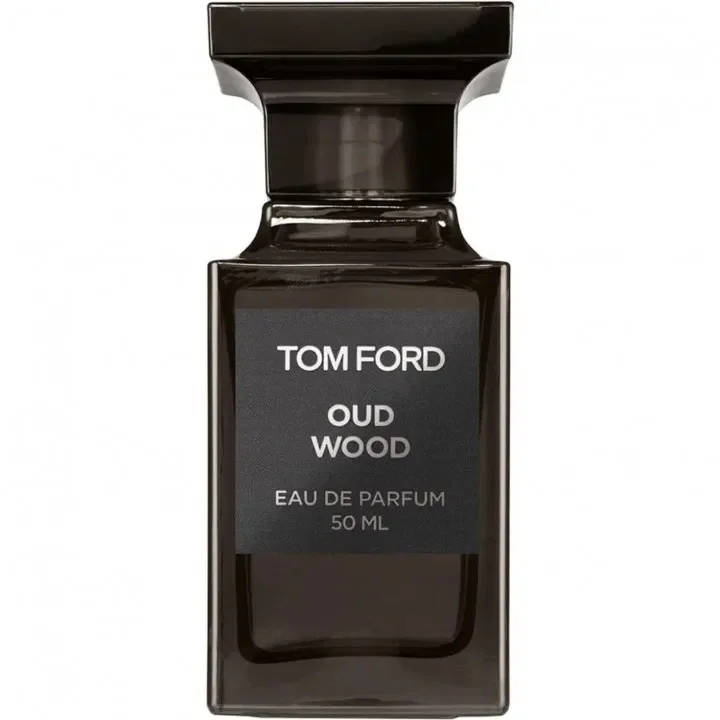
The last point is the interesting one. Tom Ford Oud Wood, the fragrance most responsible for making oud mainstream in the West, is beloved precisely because it is gentle. That gentleness is the translation, and the translation is why millions of people encountered the note at all.
The only thing worth objecting to is a claim that is not true. A synthetic oud accord marketed as an accord is fine. Marketing a synthetic accord as rare wild agarwood is not.
When real oud is worth it
If you want to try the genuine material, here is the honest guidance.
Start with Cambodi. Sweeter, softer and considerably more approachable than Hindi profiles.
Buy tiny. Natural oud oil is sold in small quantities for good reason, and a fraction of a millilitre lasts a long time.
Apply almost nothing. A smear on the back of the hand. This is not a fragrance you spray.
Wait an hour before forming an opinion. The opening is not the fragrance.
Buy from someone who tells you the origin. Region, tree source and distillation details are the marks of a seller who knows what they are selling.
Expect it to be strange. If it smells like your favourite designer oud, something is wrong.
Traditional-side houses are the better route into this than Western niche. Top Middle Eastern houses and entry picks covers where to look, and attar layering traditions covers how the material is actually worn where it comes from.
How not to get ripped off
Oud is the single most counterfeited and most misrepresented category in fragrance, for the obvious reason that the real thing is expensive and most buyers cannot verify it.
Be sceptical of cheap pure oud oil. If the price seems reasonable, it is diluted, synthetic, or something else entirely.
Watch for the word oud used as a mood. Plenty of fragrances named oud contain nothing resembling it, natural or synthetic, and are simply warm woody compositions.
Check the seller, not the story. Provenance claims are easy to write. How to spot fake perfume and the authenticity checklist apply here with extra force.
Do not assume price equals content. Expensive niche fragrances routinely use synthetic oud accords, and there is nothing wrong with that. You are paying for the composition, not the shopping list. Why price does not equal quality is the general version of this argument.
Frequently Asked Questions
Q1: Is there real oud in Tom Ford Oud Wood?
A: The composition uses an oud accord, and the smooth, gentle character of the fragrance reflects that. Like almost all Western oud fragrances at that price and volume, it delivers the impression of oud rather than a meaningful quantity of natural agarwood oil.
Q2: How can you tell if oud is real?
A: The most reliable signs are the opening and the development. Natural oud oil frequently opens with difficult barnyard or medicinal facets and changes dramatically over hours, while synthetic accords are smooth from the first second and hold their shape. Batch-to-batch consistency also indicates a synthetic accord.
Q3: Is synthetic oud bad?
A: No. Synthetic oud accords are a legitimate creative tool, they make the note wearable for a much wider audience, and they remove pressure on a protected natural resource. The only real objection is to marketing that claims natural material where none is present.
Q4: Why does real oud smell like a barnyard?
A: Because agarwood resin forms as a response to fungal infection, and the distilled oil retains fermented, animalic and medicinal compounds from that process. Hindi profiles from India show this most strongly, while Cambodi profiles are sweeter and softer.
Q5: Is oud oil worth buying?
A: If you enjoy difficult, evolving, deeply complex smells and are willing to apply almost nothing and wait, yes. If you loved a mainstream oud fragrance because it was smooth and warm, natural oud oil is likely to disappoint you, since the qualities you enjoyed are precisely the ones that were added in translation.
Conclusion
Real oud and synthetic oud are two different products that share a name, and the honest position is that both deserve to exist. One is a rare natural material with a genuinely strange character. The other is a piece of perfumery craft that let a difficult note reach millions of people.
Get free early access to WhatScent on iPhone or Android, open oud in the notes explorer, and find out which one you have actually been wearing.