"Clean perfume" has no legal or industry definition: it usually means the brand has left out a list of ingredients it chose itself, for reasons it chose itself. The same is true of most words on the green side of the fragrance counter, including natural, non-toxic, conscious and sustainable. A brand can use them without being wrong, and without telling you anything you could check.
That does not make every claim empty. Some are specific and genuinely meaningful, and from 27 September 2026 the EU has started to ban vague environmental claims that cannot be proven. This guide decodes the common words, explains why natural is not automatically safer or greener, lists the claims worth trusting, and gives you five questions to ask of any box.
Key Takeaways
- Clean is a marketing position, not a standard. Each brand or retailer writes its own exclusion list.
- Natural does not mean safer. Many of the fragrance materials restricted for skin allergy are natural.
- Trust what you could check. A named certification, a named source, a stated percentage or a refill programme that exists.
- The rules are tightening. EU law now bans generic green claims such as "eco-friendly" without proof, and fragrance allergen labelling is expanding.
- The greenest bottle is the one you finish. Buying less and using it up beats any label.
Table of Contents
- Fragrance claims decoded
- What does clean perfume mean?
- Is natural perfume safer or greener?
- How free from claims work
- What the 2026 rules change
- Which claims actually mean something
- Five questions to ask of any fragrance claim
- Frequently Asked Questions
- What to do next
Discover Your Next Signature Fragrance
Join a community of fragrance lovers. Honest reviews, scent stories and discovery shaped by people with your taste. Get access to the app today.
Live now • Free • Public launch 2026
Fragrance claims decoded
Most green fragrance words describe a mood rather than a measurable fact; only a few, such as refillable and vegan, are reliably checkable.
| Claim | What it usually means | What it does not mean |
|---|---|---|
| Clean | The brand or retailer has excluded a self-selected list of materials | Any regulated standard, or that the excluded materials were unsafe |
| Natural | Some proportion of ingredients come from natural sources | Fewer allergens, better performance or lower environmental impact |
| Natural origin (with a %) | A percentage often calculated with the ISO 16128 method | That the rest of the formula is natural |
| Non-toxic | Nothing specific | That other perfume is toxic |
| Chemical free | Nothing at all; everything is made of chemicals | Anything |
| Sustainable, eco, green | From a real programme to a word on a box | Anything, unless specifics follow |
| Responsibly sourced | Sometimes a documented supplier relationship | Certification, unless one is named |
| Vegan | No animal-derived ingredients | Cruelty-free, which is a separate claim about testing |
| Cruelty-free | Usually a policy on animal testing | Anything about the ingredients |
| Refillable | A bottle designed to be refilled | That refills are available everywhere, or priced fairly |
What does clean perfume mean?
Clean perfume means whatever the brand or retailer selling it decides it means. There is no shared list of banned ingredients behind the word. Some retailers run "clean" badges with their own exclusion lists, and brands that call themselves clean each write their own.
The excluded materials are often ones that already have a bad name online, such as phthalates or parabens, or synthetic musks in general. Sometimes the exclusion is sensible; sometimes it removes something that was safe at the levels used, and replaces it with something less studied. Either way, the word tells you about the brand's positioning, not about your skin or the planet.
Do not confuse clean perfume with the "clean" scent style. A perfume that smells clean (soapy, laundry-fresh, white musk) can be made of anything. The clean girl scent trend is about that smell, not about ingredients.
Is natural perfume safer or greener?
Not as a rule: natural materials are often more allergenic than the synthetics that replaced them, and some are harder on the environment. This is the most persistent misconception in the area.
Allergens. Many of the materials restricted for skin sensitisation are natural, or natural components. Oakmoss extract contains atranol and chloroatranol, which is why its use is tightly limited. Untreated citrus oils can cause phototoxic reactions in sunlight (phototoxicity explained). Several essential oils contain recognised allergens such as linalool, limonene and eugenol. A synthetic molecule chosen for a known safety profile is frequently the lower-risk option. Fragrance allergens and sensitisers and IFRA standards explained cover the actual rules.
Environment. Sandalwood and agarwood come from slow-growing trees, rosewood was harvested to the point of protection, and musk once came from a protected deer. In each case a synthetic replacement reduced pressure on a living resource. The smells we are loving to extinction covers those cases, and biotech naturals explains the new materials made by fermentation.
Consistency. Natural materials vary from harvest to harvest, which is charming in wine and a problem in a perfume expected to smell the same for a decade.
None of this makes naturals bad. They are complex, beautiful and irreplaceable in many perfumes. It means origin alone is neither a safety nor a sustainability argument. Naturals versus synthetics gives the fuller picture.
How free from claims work
A "free from" label works by implication: it suggests the missing ingredient is harmful and that other brands use it, without stating either. Because nothing is asserted, nothing can be challenged.
Two checks help:
- Was it ever used in this kind of product? Some free-from claims name materials that are rarely or never used in perfume anyway.
- What replaced it? Removing a material means substituting another, and the substitute is almost never named.
The broader skill of reading fragrance copy is covered in spotting marketing versus reality.
What the 2026 rules change
Two sets of EU rules matter in 2026: a ban on vague green claims that took effect on 27 September 2026, and an expanded list of fragrance allergens that must be named on labels.
- Green claims. The EU directive on empowering consumers for the green transition (Directive 2024/825) applies from 27 September 2026. It bans generic environmental claims such as "eco-friendly", "green" or "climate neutral" unless the company can show recognised excellent environmental performance, bans product claims of carbon neutrality based on offsetting, and restricts sustainability labels that are not based on an approved certification scheme or set by public authorities. Expect vaguer green wording to disappear from EU packaging over the coming months.
- Allergen labelling. EU Regulation 2023/1545 expanded the list of fragrance allergens that must be named on cosmetic labels above set concentrations, from 26 to more than 80. New products have had to comply since 31 July 2026; products already on sale have until 31 July 2028. Labels will get longer, which is useful if you know you react to a specific material.
Outside the EU, rules differ. The UK and US both have guidance on environmental claims, but the principle is the same everywhere: a claim should be specific and backed by evidence.
Which claims actually mean something
The claims worth trusting all have something you could look up. Five that qualify:
- A named certification. An organic or natural cosmetics standard such as COSMOS, a forestry certification for the packaging, or another recognised scheme, named so you can check it.
- A named source. A specific growing region, a named cooperative or a documented supplier relationship. "Responsibly sourced" alone means little.
- A stated percentage. "95% ingredients of natural origin" is a claim with a number and usually a standard method behind it. "Made with natural ingredients" is not.
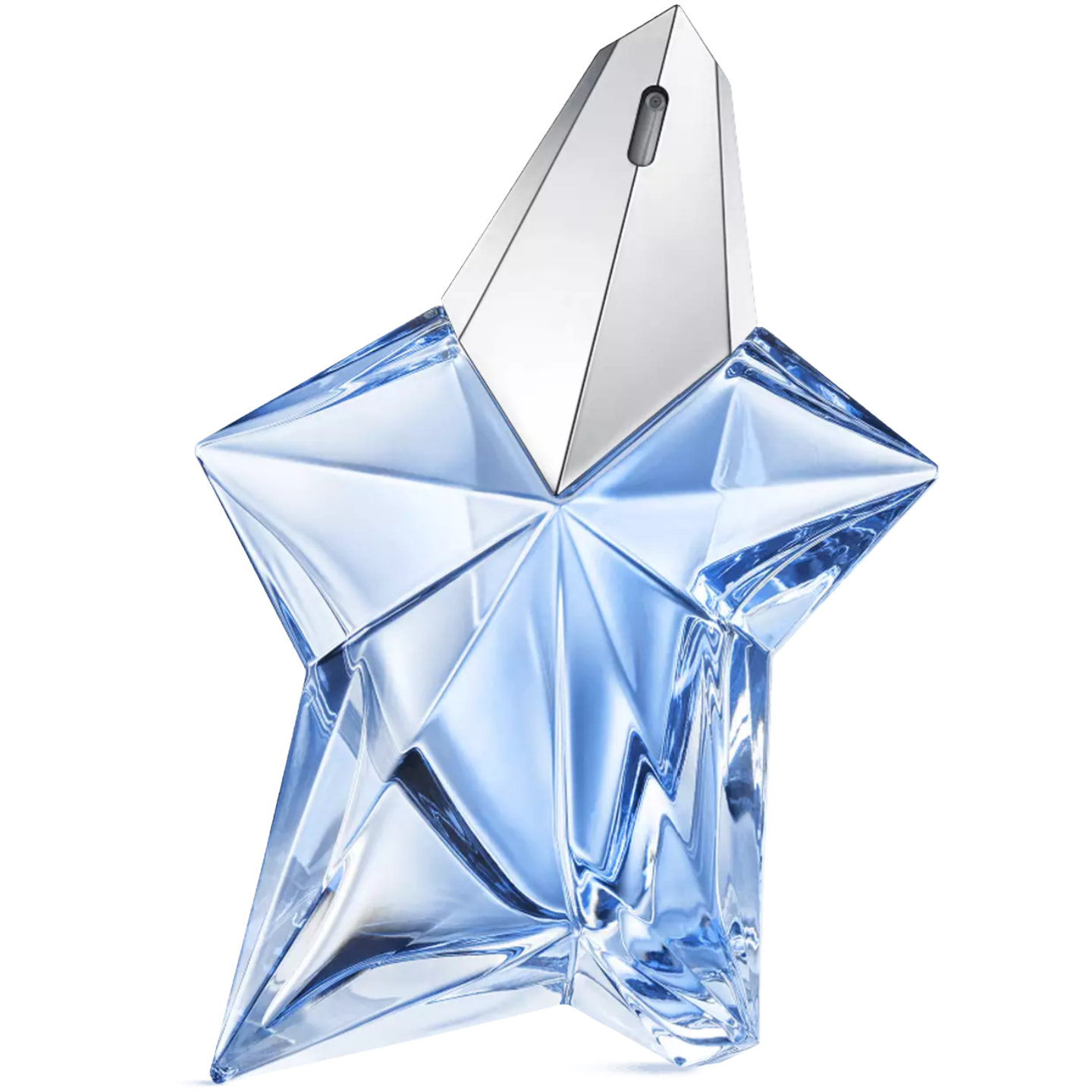
- A refill programme that exists. Easy to verify and it genuinely reduces packaging. Mugler says Angel was the first perfume offered with a refill fountain, in 1992; many houses now sell refills. Refills versus new bottles and are refillable bottles worth it weigh up the savings.
- Fuller ingredient disclosure. Rare in fragrance, because formulas are trade secrets, and meaningful when a brand does it.
Claims that could be checked are worth reading. Claims that could never be wrong are worth ignoring.
Five questions to ask of any fragrance claim
Run these five questions on any box or product page that makes a green or safety claim.
- What exactly is excluded, and why? If the brand cannot name the list and the reason, the claim is a position, not a standard.
- Who verified it? Self-certification is not certification.
- Where is the number? Percentages, named regions and named suppliers are checkable. Adjectives are not.
- What replaced what was removed? Substitution always happens and is rarely discussed.
- Does the packaging match the claim? A small bottle inside a rigid box wrapped in cellophane sits oddly next to a sustainability message; for most perfumes, the glass bottle and packaging carry a large share of the footprint. Is perfume bad for the environment? covers where the impact actually sits.
When a perfume's page on WhatScent lists its notes and accords, compare them with what the box promises: a "clean" perfume can still be built on the same musks and woods as any other. If you have a known sensitivity, log each new perfume in the Journal with a note on how your skin reacted, so you can spot the pattern across bottles.
Frequently Asked Questions
Q1: What does clean perfume mean?
A: There is no legal or industry definition. Clean perfume usually means the brand or retailer has excluded a list of ingredients it chose itself, with no external standard behind the list. It is a marketing position, not a safety or environmental guarantee.
Q2: Are natural perfumes safer than synthetic ones?
A: Not as a rule. Many of the materials restricted for skin sensitisation are natural, including compounds in oakmoss extract and some citrus oils, and several essential oils contain recognised allergens. Synthetic materials are often chosen for their known safety profile and can be the lower-risk option.
Q3: What does non-toxic mean on a perfume?
A: In practice, nothing specific. Toxicity depends on dose and exposure, not on whether an ingredient is natural or synthetic, and perfume sold legally is already assessed against safety rules. The phrase implies a contrast with other products without making a claim you could test.
Q4: Is vegan perfume the same as cruelty-free?
A: No. Vegan means no animal-derived ingredients, while cruelty-free refers to animal testing policy. A perfume can be one without the other, and the two are often confused in marketing. Most modern perfumes use synthetic musks and ambers, but some still use beeswax absolute or other animal-derived materials.
Q5: How can I tell if a perfume's sustainability claim is real?
A: Look for something checkable: a named certification, a specific growing region or supplier, a stated percentage of natural-origin ingredients, or a refill programme that actually exists. In the EU, generic claims such as "eco-friendly" are banned without proof from 27 September 2026, so specific claims should become more common.
What to do next
Next time a "clean" or "sustainable" perfume tempts you, look it up on WhatScent, read its notes and accords, and save it to your Wishlist under To Try rather than buying on the label. Wear a sample for a full day and judge it on how it smells and how your skin reacts.
Related reads: