Perfume is not a major driver of environmental harm next to food, transport or fashion, but it is not neutral either. Its impact comes from five places: the volatile organic compounds (VOCs) released when you spray it, the packaging, a handful of raw materials taken from threatened trees, some synthetic musks that persist in water, and the ordinary footprint of producing alcohol and shipping heavy glass.
The most useful single fact is this: the biggest lever is in your hands, not the label's. Buying fewer bottles and finishing the ones you own does more than any "natural" or "eco" claim on a box. This guide goes through each part of the footprint, what the evidence supports, and what actually helps.
Key Takeaways
- Spraying releases VOCs. Perfume is mostly alcohol and volatile aroma materials, which contribute to urban air pollution; California already regulates VOC levels in personal fragrance products.
- Natural is not automatically greener. Wild sandalwood and agarwood (oud) have been badly overharvested; synthetics and plantation-grown materials take pressure off them.
- Packaging is the part you can see and influence. Refills cut glass and boxes; finishing bottles cuts waste.
- Buy less, finish more. An unworn bottle carries its whole footprint for no use at all.
Table of Contents
- Is perfume bad for the environment? The short answer
- VOCs: what happens when you spray
- Natural vs synthetic: which is greener?
- Sandalwood and oud: the two sourcing problems
- Synthetic musks and water
- Packaging, glass and refills
- What actually helps, ranked
- Frequently Asked Questions
- What to do next
Discover Your Next Signature Fragrance
Join a community of fragrance lovers. Honest reviews, scent stories and discovery shaped by people with your taste. Get access to the app today.
Live now • Free • Public launch 2026
Is perfume bad for the environment? The short answer
Perfume has a modest but real environmental footprint, spread across several stages of its life. The table below sums up where it sits and how much a buyer can change it.
| Part of the footprint | What the concern is | How much you can influence it |
|---|---|---|
| VOC emissions when worn | Alcohol and aroma materials evaporate into the air and contribute to ozone and fine-particle formation | Some: fewer sprays, fewer products |
| Raw materials | Most are ordinary crops; a few come from threatened trees | Some: choose responsibly sourced or synthetic versions |
| Persistent synthetic musks | Some older musk types persist in water and wildlife | Little directly; most exposure is from detergents |
| Alcohol production | Farming, fermentation and distillation of ethanol | Little |
| Packaging and transport | Heavy glass, mixed materials that are hard to recycle, global shipping | A lot: refills, finishing bottles, recycling properly |
None of these makes a bottle of perfume an environmental disaster. Together they make a large collection of rarely worn bottles a genuinely wasteful one.
VOCs: what happens when you spray
When you spray perfume, almost all of it evaporates: the alcohol within minutes, the aroma materials over hours. Those are volatile organic compounds, and in sunlight VOCs react with nitrogen oxides to form ground-level ozone and fine particles, two of the main components of urban smog.
The evidence that this matters at city scale is recent. A 2018 study in Science, led by researchers at the US National Oceanic and Atmospheric Administration, found that "volatile chemical products" (a category covering personal care products, cleaning products, paints and pesticides) had become as large a source of petrochemical VOC emissions in US cities as vehicle exhaust, because car emissions have fallen so much. Perfume is one small part of that category, not the main driver, but it belongs to it.
Regulators have noticed. The California Air Resources Board has been required to regulate VOCs in consumer products since 1989, and its rules include a category for personal fragrance products, and amendments adopted in 2021 lower the allowed VOC content for personal fragrances in stages over the following years. Expect more fragrance makers to experiment with lower-alcohol and water-based formulas as a result.
What it means for you: VOC emissions scale with how much you spray. Two well-placed sprays instead of six is better for the air, and usually better for the people around you. Our guide to applying perfume properly shows how to get the most from fewer sprays.
Natural vs synthetic: which is greener?
Neither category is greener across the board; it depends entirely on the material. The assumption that "natural" means "better for the planet" is wrong in several of the most important cases.
- Most naturals are ordinary crops. Lavender, citrus peels, rose, mint and vetiver are farmed and harvested every season, with the normal impacts of agriculture: land, water, fertiliser, labour.
- Some naturals need enormous amounts of plant material. Flower absolutes such as rose and jasmine take large quantities of blossoms for a small amount of material, which multiplies the land and labour behind each bottle.
- Some naturals come from slow-growing trees. Sandalwood and agarwood are the serious cases, covered in the next section.
- Synthetics have their own footprint. Many are made from petrochemical feedstocks, with the energy and waste of chemical manufacturing. But they can be produced without land use or harvesting, and a small amount of a strong synthetic replaces a large amount of plant material.
- Biotech materials sit in between. Fermentation can now produce some natural-identical molecules without the crop, as our guide to biotech naturals in perfume explains.
Our deeper comparison of naturals and synthetics in perfumery covers smell as well as sustainability.
Sandalwood and oud: the two sourcing problems
Sandalwood and oud are the two perfume materials whose sourcing has caused real conservation damage, because both come from trees that take decades to produce what perfumers want.
Sandalwood. Indian sandalwood (Santalum album) is listed as Vulnerable on the IUCN Red List after decades of overharvesting and illegal felling of wild trees. Much of the sandalwood oil used in perfumery today comes from plantation-grown trees, including large plantations of Santalum album in northern Australia, and from Australian sandalwood (Santalum spicatum). Perfumers also rely heavily on synthetic sandalwood molecules such as Javanol, Ebanol and Sandalore, which give a creamy sandalwood effect without felling a tree. Our sandalwood note guide covers how each smells.
Oud (agarwood). Oud is a dark, fragrant resin that forms in Aquilaria trees in response to infection, and wild trees were cut down in large numbers to find it. All Aquilaria and Gyrinops species have been listed in Appendix II of CITES since 2004, which means international trade is regulated and requires permits. Cultivated agarwood, in which plantation trees are deliberately inoculated, now supplies a growing share of the market. And most "oud" in Western perfumery is an accord built largely from synthetics, as our guide to real oud vs synthetic oud explains.
For sandalwood and oud, a well-made synthetic is often the more sustainable choice, not the lesser one.
The wider list of pressured materials, rosewood among them, is covered in the smells we are loving to extinction.
Synthetic musks and water
Some synthetic musks persist in the environment, and this is the one chemistry concern with solid evidence behind it.
- Nitro musks, the earliest synthetic musks, were largely phased out after toxicity and persistence concerns; musk ambrette and musk xylene, for example, are restricted or banned for cosmetic use in the EU.
- Polycyclic musks, such as galaxolide and tonalide, have been widely detected in rivers, wastewater and fish. Their main route into water is washing, and most of the volume is used in detergents and personal care products rather than fine perfume.
- Macrocyclic musks, which the industry has been shifting toward, are generally more biodegradable, though they cost more to make.
This is an area of active scrutiny rather than a settled picture. Our guide to whether musk still comes from animals explains the musk families and where each is used.
Packaging, glass and refills
Packaging is the part of perfume's footprint most visible to buyers and most within their control. Perfume bottles are heavy by design, because weight signals quality, and that weight has to be melted, shaped and shipped around the world.
- Glass is energy-intensive to make and heavy to transport, and decorative bottles can weigh far more than the perfume inside them.
- Mixed materials resist recycling. A typical bottle combines glass, a crimped metal collar and a plastic dip tube and pump, which most household recycling cannot separate.
- Boxes, inserts and cellophane are discarded the day you open them.
Refills are the most effective packaging fix, because one bottle is reused and each refill needs far less glass and packaging. Some houses have offered them for decades: Mugler has sold Angel as refillable since its launch.

Mugler Angel (1992) is the classic example: a gourmand of patchouli, caramel and vanilla sold from the start with a refill system, long before refills were a trend. Many houses now sell refill bottles for their bestsellers.
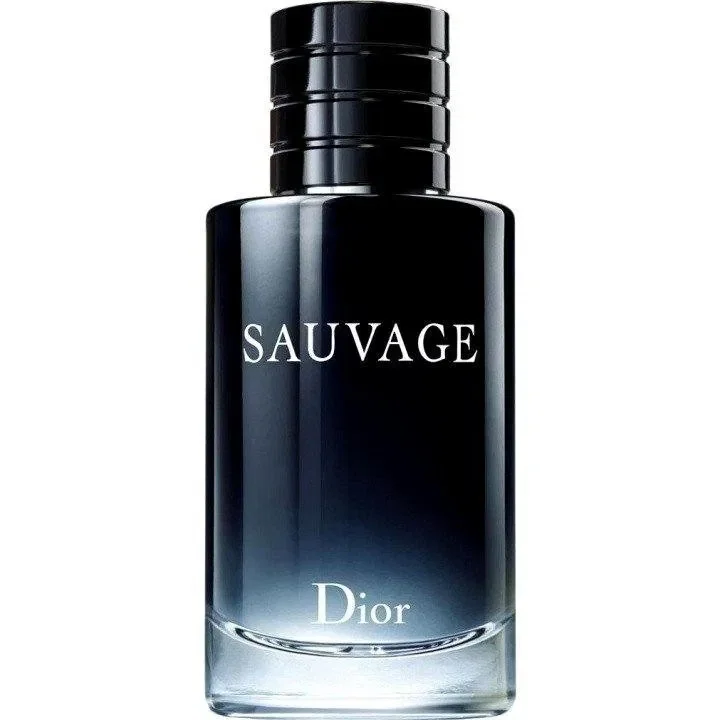
Dior Sauvage (2015 Eau de Toilette, François Demachy) is sold with large refill bottles, which makes it a good example of a mainstream bestseller where refilling is easy.
Refills only help if you would have bought a second bottle anyway. Our guides to refillable bottles and their value and refills versus new bottles cover the practical trade-offs.
What actually helps, ranked
Ranked by how much difference each step makes, from most to least.
- Buy less and finish what you own. An unworn bottle carries its entire footprint, from glass to shipping, for no use at all. This outweighs everything else on the list.
- Sample before buying a full bottle. Most unfinished bottles are blind buys that did not work out. Our sampling strategy and the case for buying decants show how.
- Refill instead of rebuying, where the house offers it.
- Spray less. Fewer, better-placed sprays mean fewer VOCs and a bottle that lasts longer.
- Choose responsibly sourced or synthetic sandalwood and oud. Look for plantation-grown, certified or synthetic claims you can check, rather than vague "natural" language.
- Pass on what you will not wear. Swapping, selling or gifting keeps a bottle in use; our swapping and selling etiquette guide covers how.
- Recycle properly. Remove metal collars and pumps where you can, and follow local rules for glass.
What helps much less: buying an extra bottle because it is marketed as sustainable. The additional bottle is the problem. Our guide to greenwashing in fragrance shows how to read those claims.
Logging what you actually wear in the WhatScent Journal makes the first step much easier: after a few weeks, the bottles you never reach for are obvious, and those are the ones to pass on before buying anything new.
Frequently Asked Questions
Q1: Is perfume bad for the environment?
A: Perfume has a modest but real environmental footprint. It releases volatile organic compounds when sprayed, uses heavy and hard-to-recycle packaging, and a few ingredients, such as wild sandalwood and agarwood, have been overharvested. The biggest problem is waste: bottles bought and never finished.
Q2: Does perfume cause air pollution?
A: In a small way, yes. Perfume's alcohol and aroma materials are volatile organic compounds, which help form ground-level ozone and fine particles in sunlight. Research has shown that consumer products, including personal care products, are now a significant source of VOCs in cities, and California regulates VOC levels in personal fragrance products.
Q3: Are natural perfumes better for the environment than synthetic ones?
A: Not automatically. Some naturals, such as sandalwood and agarwood, come from slow-growing trees that were overharvested, while synthetics can reproduce those smells without felling trees. Synthetics have their own manufacturing footprint, so the honest answer depends on the specific material.
Q4: Is oud sustainable?
A: Wild oud is not: agarwood trees were cut down in large numbers, and all Aquilaria species are listed under CITES, which regulates their trade. Cultivated agarwood from inoculated plantation trees is more sustainable, and most oud in Western perfumes is a synthetic accord rather than natural agarwood oil.
Q5: Are refillable perfumes better for the environment?
A: Yes, when you would otherwise buy a new bottle. A refill needs far less glass and packaging than a full new bottle and box. Refills help most for perfumes you wear often enough to finish.
What to do next
Before your next purchase, check what you already own: log a week of wears in the WhatScent Journal, then decide which unworn bottles to swap, sell or gift. When you do buy, start with a sample or a decant.
Related reads:
- The smells we are loving to extinction, on the materials under most pressure.
- Shelf life and waste, on why a half-used bottle is the most wasteful thing in a collection.
- Decluttering: sell, swap or donate, for what to do with bottles you do not wear.